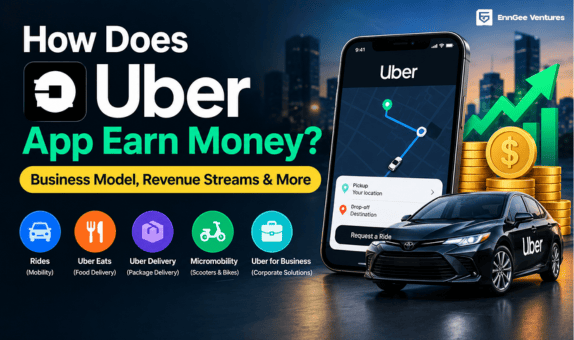
How Does Uber App Earn Money? Business Model, Revenue Streams & More
Marketing Team
October 12, 2026 ∙
18 min read
Uber is a ride-hailing platform that connects riders with drivers through its app. While rides are its core service, Uber earns money through multiple revenue streams, including service fees, delivery, and freight. Its marketplace model allows Uber to generate revenue from transactions without owning most of the vehicles on its platform.
What Is Uber and How Does Its Business Model Work?
Uber works as a digital marketplace connecting riders and drivers. The app manages bookings, payments, driver matching, and trip tracking, while Uber earns a share from transactions made through its platform.
Overview of the Uber Business Model
Uber uses a two-sided marketplace where riders request trips, and drivers accept them. Uber manages the platform and earns revenue from completed transactions.
How Uber Connects Riders and Drivers
The app matches riders with available drivers based on factors such as location and availability. Both users can manage the trip through the app.
How Uber’s Marketplace Creates Value
Riders get convenient transportation, while drivers get access to customers. Uber manages the technology, payments, and booking process for both sides.
Who Pays Uber?
Riders pay for their trips through the app. Uber receives its applicable share of the fare, while the remaining amount goes toward driver’s earnings and other applicable costs.
How Does Uber App Earn Money?
Uber earns money through several revenue streams connected to rides, subscriptions, advertising, delivery, and business services. Its main income comes from fees and commissions charged on transactions made through its platform.
Ride-Hailing Commissions
Uber earns a commission or service share from rides completed through its platform. The amount can vary by market, ride type, and other factors.
Booking and Service Fees
Uber may charge riders additional booking or service fees on top of the trip fare. These fees help cover platform and operational costs.
Surge Pricing and Dynamic Pricing
During periods of high demand, Uber may increase fares through dynamic pricing. This can increase the total value of rides and, consequently, Uber’s revenue share.
Uber Eats Revenue
Uber earns revenue from Uber Eats through fees and commissions associated with food orders, including charges involving restaurants and customers.
Uber One Subscription Revenue
Uber One is a paid membership program that provides benefits such as delivery savings and other member offers. Subscription fees provide Uber with recurring revenue.
Advertising Revenue
Uber generates advertising revenue by allowing businesses to promote products and services across its apps and platforms.
Uber for Business Revenue
Uber for Business serves companies that use Uber for employee transportation, business travel, and related services. Uber earns revenue from these business transactions.
Uber Freight Revenue
Uber Freight connects shippers with carriers for freight transportation. Uber earns revenue by facilitating these logistics transactions.
How Does Uber Make Money from Drivers?
Uber’s driver-side business involves fees and other charges associated with trips completed through its platform.
Driver Service Fees
Uber retains a portion of the earnings generated through rides as part of its platform and service economics.
Driver Incentives and Promotions
Uber offers incentives and promotions to attract and retain drivers. These programs can influence the overall economics of the driver’s marketplace.
Driver Cancellation Fees
In certain situations, riders may be charged a cancellation fee when a trip is cancelled. Applicable portions can contribute to Uber’s revenue.
Other Driver-Related Revenue
Uber may generate additional revenue through driver-related services, programs, and marketplace activities depending on the country and service.
How Does Uber Make Money from Riders?
Riders are a major source of Uber’s revenue because they pay for transportation services booked through the app.
Base Fare
The base fare forms the starting portion of a rider’s trip cost and contributes to the total ride revenue.
Booking Fees
A booking or service fee may be added to the ride fare to cover platform-related costs.
Surge Pricing
When demand is higher than available driver supply, fares may increase through Uber’s dynamic pricing system.
Premium Ride Categories
Uber offers higher-priced categories such as premium and luxury rides. These categories can generate higher revenue per trip.
Airport and Location-Based Fees
Certain trips may include airport, toll, or location-specific fees. These charges can increase the overall amount paid by riders.
How Does Uber Eats Make Money?
Uber Eats generates revenue through food, groceries, and retail delivery services. It earns money from restaurants, customers, and advertising activities on the platform.
Restaurant Commission
Uber Eats charges restaurants for a commission on orders received through the platform. Rates can vary depending on the market and agreement.
Delivery Fees
Customers may pay a delivery fee based on factors such as distance, location, and order conditions.
Service Fees
Uber Eats may add service fees to orders, creating an additional revenue source from customers.
Restaurant Advertising
Restaurants can pay to promote their listings and reach more customers through sponsored placements within Uber Eats.
Grocery and Retail Delivery
Uber Eats also facilitates grocery and retail deliveries, generating revenue through delivery charges, service fees, and merchant arrangements.
How Does Uber One Generate Revenue?
Uber One is a subscription-based service that gives members benefits across eligible Uber and Uber Eats services. It creates recurring revenue while encouraging customers to use the platform more frequently.
What Is Uber One?
Uber One is Uber’s membership program offering benefits such as delivery savings, member pricing, and other eligible offers.
How Uber One Creates Recurring Revenue
Members pay a recurring subscription fee, giving Uber a predictable source of revenue beyond individual rides and orders.
How Uber One Increases Customer Retention
Subscription benefits encourage members to continue using Uber services to get more value from their membership.
Benefits of the Subscription Model
The model provides recurring income and can increase customer engagement across Uber’s different services.
How Does Uber Make Money from Advertising?
Advertising has become another revenue stream for Uber, allowing brands and merchants to pay for visibility across its digital platforms.
In-App Advertising
Businesses can display advertisements to users while they browse Uber and Uber Eats.
Sponsored Restaurant Listings
Restaurants can pay for sponsored placements that help their listings appear more prominently to potential customers.
Brand Advertising
Brands can advertise products and services to Uber’s large customer base through targeted campaigns.
Sponsored Products
Merchants can promote specific products or offers within the Uber Eats platform.
Why Advertising Is Important to Uber
Advertising allows Uber to generate additional revenue from its existing user base without relying on rides and delivery transactions.
How Does Uber Make Money from Uber for Business?
Uber for Business provides transportation, travel, and delivery solutions to companies. It generates revenue through business accounts and services used by organizations.
Corporate Transportation
Companies use Uber for employee transportation and business trips, generating revenue from completed rides.
Business Travel Management
Uber helps companies manage employee travel and transportation through centralized business accounts.
Employee Meal and Delivery Programs
Businesses can use Uber Eats for employee meals and food delivery, creating additional transaction revenue.
Business Account Revenue
Uber earns transactions made through corporate accounts and related business services.
How Does Uber Freight Make Money?
Uber Freight is a digital freight marketplace that connects businesses needing transportation with carriers.
What Is Uber Freight?
Uber Freight is a platform that helps shippers arrange and manage freight transportation.
How Uber Connects Shippers and Carriers
The platform connects shippers with carriers based on shipment requirements, helping manage freight movement.
Freight Marketplace Revenue
Uber earns revenue by facilitating transactions between shippers and carriers.
Logistics Technology Revenue
Uber Freight also provides technology and tools that help businesses manage logistics and transportation.
Uber Business Model Canvas Explained
The Uber Business Model Canvas shows how the company operates, serves customers, and generates revenue.
Key Partners
Drivers, delivery partners, restaurants, carriers, advertisers, and other service providers are key partners.
Key Activities
Major activities include platform management, driver matching, payment processing, marketing, and customer support.
Key Resources
Uber’s main resources include its mobile apps, technology infrastructure, brand, data, and global network.
Customer Segments
Its customers include riders, drivers, businesses, restaurants, shoppers, shippers, and delivery users.
Value Propositions
Uber offers convenient transportation, delivery, and logistics services through its digital platforms.
Customer Relationships
Uber maintains customer relationships through its apps, support services, promotions, and membership programs.
Revenue Streams
Major revenue sources include mobility, delivery, freight, advertising, subscriptions, and business services.
Cost Structure
Major costs include technology, incentives, marketing, insurance, payment processing, and operations.
How Does Uber’s Commission Model Work?
Uber’s commission model allows it to earn a share of transactions completed through its platform.
Customer Books a Ride
The rider selects a ride and requests it through the Uber app.
Uber Calculates the Fare
The platform calculates the estimated fare using factors such as time, distance, location, and demand.
Customer Makes the Payment
The rider pays through the available payment method after the trip.
Uber Deducts Applicable Fees
Uber accounts for its applicable fees and other charges from the transaction.
Driver Receives Earnings
The remaining eligible amount is reflected in the driver’s earnings according to the applicable terms.
How Does Uber Pricing Work?
Uber pricing can change based on the trip, location, ride type, and marketplace conditions.
Base Fare
The base fare provides the starting cost for a ride.
Distance and Time Charges
The final fare can include charges based on trip distance and duration.
Supply and Demand
Pricing can change when rider demand and driver availability change.
Surge Pricing
During high-demand periods, fares may increase through Uber’s surge or dynamic pricing system.
Tolls and Additional Fees
Tolls, airport charges, and other applicable fees may be added to the total fare.
Discounts and Promotions
Uber may offer discounts, promotional fares, or credits to attract and retain customers.
What Is Uber’s Major Revenue Streams?
Uber generates revenue from several businesses and services.
Mobility Revenue
Revenue comes from rides and other transportation services.
Delivery Revenue
Uber earns food, groceries, and retail delivery services.
Freight Revenue
Uber Freight generates revenue by facilitating freight and logistics transactions.
Advertising Revenue
Businesses pay to promote products, services, and listings across Uber’s platforms.
Subscription Revenue
Membership programs such as Uber One provide recurring subscription revenue.
Business Services Revenue
Uber earns transportation and delivery services provided to corporate customers.
What Is Uber’s Major Operating Costs?
Running a large marketplace involves several major expenses.
Driver and Delivery Partner Incentives
Uber spends on incentives and promotions designed to attract and retain drivers and delivery partners.
Technology and Infrastructure
The company invests in apps, software, servers, data systems, and other technologies.
Marketing and Customer Acquisition
Marketing campaigns and promotional offers help Uber attract riders, businesses, and other users.
Payment Processing
Uber incurs costs for processing digital payments and financial transactions.
Insurance and Safety
Insurance coverage and safety-related programs contribute to operating expenses.
Customer Support
Uber spends on support systems and teams that assist users and partners.
Legal and Regulatory Expenses
The company also incurs costs related to regulations, compliance, legal matters, and market operations.
Is Uber Profitable?
Uber’s profitability depends on revenue growth, operating costs, marketplace activity, and performance across its different businesses.
Uber’s Path to Profitability
Uber has focused on improving its financial performance by expanding revenue sources and managing operating expenses.
Revenue vs. Gross Bookings
Gross bookings represent the total value of transactions on Uber’s platform, while revenue reflects the amount Uber recognizes under its accounting rules.
Operating Expenses
Expenses such as technology, incentives, marketing, insurance, and support affect Uber’s overall financial results.
Profit Margins
Profit margins depend on how much revenue Uber retains after covering operating and other expenses.
Factors Affecting Uber’s Profitability
Demand, driver supply, pricing, competition, regulations, incentives, and operating costs can all affect Uber’s profitability.
What Makes Uber’s Business Model Successful?
Uber’s business model combines a large marketplace with multiple services and revenue sources. Its technology helps manage rides, deliveries, payments, and customer interactions.
Two-Sided Marketplace
Uber connects riders with drivers, allowing both sides to use the same platform.
Network Effects
More riders can attract more drivers, while more drivers improve availability for riders.
Global Customer Base
Uber serves customers across many markets, giving it access to a broad user base.
Multiple Revenue Streams
Rides, delivery, subscriptions, advertising, freight, and business services diversify its income.
Technology-Driven Operations
The app handles booking, matching, payments, tracking, and other key processes.
Cross-Selling Opportunities
Users can access multiple services, such as rides, food delivery, and subscriptions through the Uber ecosystem.
How Does Uber Retain Customers?
Uber uses several strategies to encourage customers to continue using its services.
Uber One Membership
Uber, one offers membership benefits that encourage customers to use Uber and Uber Eats regularly.
Personalized Recommendations
User data can help Uber provide relevant ride, delivery, and service recommendations.
Promotions and Discounts
Discounts, offers, and promotional campaigns can encourage repeat bookings and orders.
Multiple Services in One Platform
Customers can access transportation, food, groceries, and other services from the same platform.
Convenient Payment Options
Digital payment options make transactions faster and easier for users.
Challenges in Uber’s Revenue Model
Uber faces several challenges that can affect its revenue and profitability.
High Operating Costs
Technology, insurance, incentives, marketing, and support contribute to significant operating expenses.
Regulatory Challenges
Transportation and employment regulations can vary across markets and affect operations.
Market Competition
Uber competes with other ride-hailing, delivery, and transportation platforms.
Driver Supply
Maintaining enough drivers is important for meeting customer demand and reducing waiting times.
Customer Price Sensitivity
Higher fares may discourage customers, especially in price-sensitive markets.
Safety and Insurance Costs
Safety measures, insurance, and related expenses add to the cost of operating the platform.
How Has Uber’s Business Model Evolved?
Uber has expanded from a ride-hailing service into a broader mobility, delivery, and logistics platform.
Uber’s Early Ride-Hailing Model
Uber initially focused on connecting riders with drivers through its mobile platform.
Expansion Into Food Delivery
Uber expanded into food delivery through Uber Eats, adding restaurants and customers to its marketplace.
Introduction of Subscription Services
Uber One introduced a subscription model that provides recurring revenue.
Growth of Uber for Business
Uber developed services for companies managing employee transportation and business travel.
Expansion Into Advertising
Uber added advertising services that allow businesses to reach users across its platforms.
Growth of Uber Freight
Uber Freight expanded the company’s business into digital freight and logistics services.
How Much Does It Cost to Build an App Like Uber?
The cost of developing an Uber-like app depends on its features, platform, design, and technology requirements.
Basic Uber-Like App
A basic version with essential booking, tracking, payment, and driver features may require a smaller development budget.
Medium-Complexity Uber-Like App
A medium-level app can include advanced payments, notifications, admin tools, ratings, and multiple ride options.
Advanced Uber-Like Platform
An advanced platform may include AI, real-time analytics, automated pricing, multiple services, and advanced management tools.
Factors Affecting Development Cost
Features, development of team location, UI/UX complexity, integrations, platforms, security, and maintenance can affect the total cost.
Development Timeline
A basic MVP may take a few months, while a feature-rich platform can require significantly more development time.
Essential Features of an Uber-Like App
An Uber-like platform needs separate features for riders, drivers, and administrators.
Rider App Features
Ride booking, fare estimates, driver tracking, payments, ratings, trip history, and notifications are key features.
Driver App Features
Drivers need to ride requests, navigation, earnings tracking, trip management, and availability controls.
Admin Panel Features
The admin panel manages users, drivers, rides, payments, reports, promotions, and platform activity.
Payment Features
The app should support secure digital payments, invoices, refunds, and transaction tracking.
GPS and Navigation Features
GPS enables real-time location tracking, route management, and driver-rider matching.
Advanced AI Features
AI can support demand forecasting, fraud detection, personalized recommendations, and intelligent pricing.
Technology Stack Behind an Uber-Like App
The technology stack depends on the platform’s features, scale, and development requirements.
Frontend Technologies
Technologies such as React Native, Flutter, Swift, and Kotlin can be used to develop mobile applications.
Backend Technologies
Node.js, Python, Java, or similar technologies can handle server-side operations and APIs.
Database Technologies
Databases such as PostgreSQL, MySQL, or MongoDB can store user, trip, payment, and other application data.
Cloud Infrastructure
Cloud platforms provide computing, storage, databases, and other infrastructure needed to run the application.
Maps and GPS APIs
Mapping services enable location tracking, route calculation, geocoding, and navigation.
Payment Gateway Integration
Payment gateways allow users to pay securely through cards, wallets, bank transfers, and other supported methods.
AI and Machine Learning
AI and machine learning can be used for demand prediction, recommendations, fraud monitoring, and pricing analysis.
How to Build an App Like Uber
Building an Uber-like app requires planning the business model, features, technology, and launch strategy.
Conduct Market Research
Study competitors, customer needs, pricing, and market demand before development.
Define the Target Audience
Identify whether the platform will serve commuters, businesses, students, families, or another specific group.
Choose the Business Model
Decide how the platform will generate revenue through commissions, subscriptions, fees, advertising, or a combination.
Plan App Features
Prioritize essential rider, driver, admin, payment, and tracking features for the first version.
Design UI/UX
Create simple user flows and interfaces that make booking and managing rides easy.
Develop the Application
Build the rider app, driver app, backend, admin panel, and required supporting systems.
Integrate APIs
Connect payment, maps, GPS, notifications, analytics, and other third-party services.
Test and Launch
Test functionality, security, performance, and user flows before releasing the app.
Maintain and Scale
Regular updates, bug fixes, monitoring, and feature improvements help the platform handle growing usage.
Uber-Like App Monetization Strategies
An Uber-like app can use one or several monetization methods.
Commission-Based Model
The platform takes a percentage or applicable share from completed rides or transactions.
Subscription Model
Users or drivers can pay recurring fees for additional benefits or services.
Advertising Model
Businesses can pay to promote products, services, or listings within the app.
Delivery Fee Model
Customers can be charged with delivery fees for food, groceries, or other delivery services.
Premium Service Model
Higher-priced services, such as luxury rides or priority services, can generate greater revenue per transaction.
Hybrid Monetization Model
Combining commissions, subscriptions, advertising, delivery fees, and premium services can create multiple revenue sources.
Future of Uber’s Business Model
Uber is expected to expand its business through AI, autonomous technology, delivery, advertising, and logistics. These areas can create new revenue opportunities while improving their existing services.
AI-Powered Mobility
AI can help Uber improve route planning, demand forecasting, pricing, and personalized services.
Autonomous Vehicles
Self-driving vehicles could become part of Uber’s mobility network and change how rides are provided.
Growth of Delivery Services
Uber can continue expanding food, groceries, and retail delivery to reach more customers.
Expansion of Advertising
Advertising can become a larger revenue source as more businesses promote their products through Uber’s platforms.
Subscription-Based Services
Subscription programs can provide recurring revenue while encouraging customers to use Uber services more frequently.
Autonomous Delivery
Autonomous vehicles and delivery technologies could help reduce delivery costs and improve efficiency.
Logistics Technology
Uber Freight can continue developing digital tools for businesses to manage transportation and logistics.
Frequently Asked Questions
How does Uber app earn money?
Uber earns money mainly through ride commissions, service fees, delivery, subscriptions, advertising, freight, and business services.
What percentage does Uber take from each ride?
Uber’s share can vary by market, ride type, and other factors. There is no single percentage that applies to every ride.
Does Uber make money from drivers?
Uber earns revenue from transactions completed through its driver network and may apply platform-related fees.
How do Uber Eats make money?
Uber Eats earns through restaurant commissions, delivery and service fees, advertising, and grocery and retail services.
How does Uber One make money?
Uber One generates recurring revenue through membership subscription fees.
Does Uber make money from advertising?
Yes. Uber earns advertising revenue from businesses that promote products, restaurants, and services on its platforms.
How does Uber’s surge pricing generate revenue?
Surge pricing increases fares when demand is high, and driver’s availability is limited, which can increase the value of completed trips.
Is Uber a profitable company?
Uber’s profitability can change over time based on revenue, operating expenses, incentives, demand, and market conditions.
How does Uber make money without owning a car?
Uber operates mainly as a technology marketplace that connects riders with independent drivers and facilitates transactions.
How much does it cost to build an app like Uber?
The cost depends on features, platforms, design, integrations, development team, and project complexity. A basic MVP costs less than an advanced multi-service platform.
What is the best monetization model for an Uber-like app?
A commission-based model is common, but combining commissions with subscriptions, delivery fees, advertising, or premium services can create additional revenue sources.
Can I build an app like Uber for a specific niche?
Yes, an Uber-like platform can be developed for niches such as corporate transportation, healthcare rides, logistics, local delivery, or other on-demand services.
Final Thoughts on How Uber Earns Money
Uber’s business model shows how a digital marketplace can generate revenue through multiple services instead of relying on a single income source. Its combination of mobility, delivery, subscriptions, advertising, freight, and business services creates several opportunities for revenue generation.
Key Takeaways from Uber’s Revenue Model
Uber mainly earns through commissions, fees, subscriptions, advertising, delivery, freight, and business services. Its technology connects different customer groups while supporting transactions across its platform.
Lessons Businesses Can Learn from Uber
Businesses can learn the value of having multiple revenue streams, serving different customer segments, and using technology to simplify transactions. A focused niche, suitable monetization model, and well-planned app can help create a business similar to Uber’s marketplace approach.
Explore More Insights
Dive into more expert perspectives, trends, and helpful resources.
AI
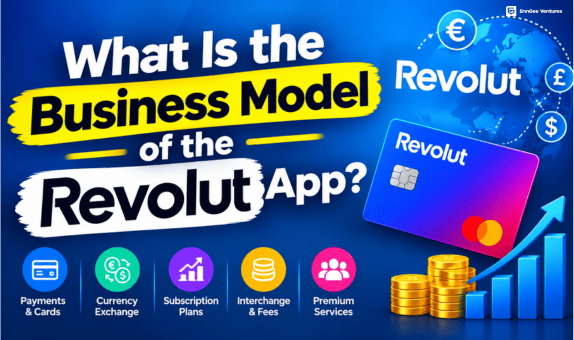
What Is the Business Model of the Revolut App?
Revolut is a digital-first financial platform offering banking, payments, money transfers, cards, and other financial services through its app. Unlike…
Marketing Team
October 18, 2026 ∙
26 min read
AI
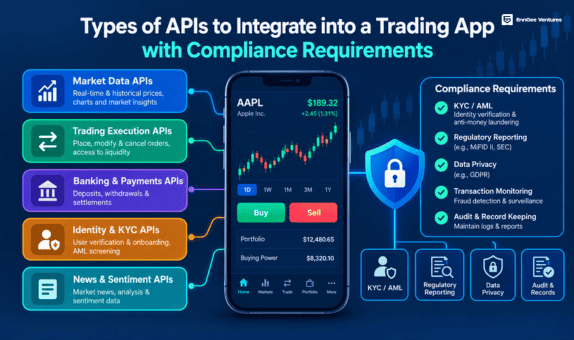
Types of APIs to Integrate into a Trading App with Compliance Requirements
Understanding APIs in Trading Applications APIs connect trading apps with brokers, exchanges, payment gateways, market data providers, and compliance systems.…
Marketing Team
October 13, 2026 ∙
14 min read
App Development
How to Build an iGaming Sportsbook Platform Like Bet365 (2026 Complete Development Guide)
The iGaming industry has rapidly evolved into a multi-billion-dollar global ecosystem, and sportsbook platforms are one of its most profitable…