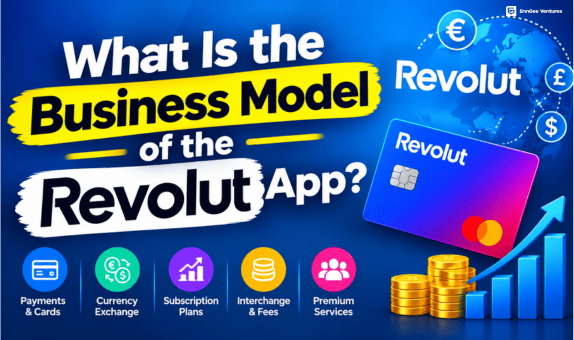
Revolut is a digital-first financial platform offering banking, payments, money transfers, cards, and other financial services through its app. Unlike traditional banks, it operates mainly through digital channels, helping it serve customers across multiple markets.
This article explores Revolut’s business model, including how it attracts users, generates revenue, manages costs, and expands globally.
What Is Revolut?
Overview of Revolut
Revolut is a digital-first financial platform that offers services such as personal banking, payments, money transfers, cards, savings, investments, and currency exchange through its app. It aims to provide multiple financial services within one platform.
When and Why Was Revolut Founded?
Revolut was founded in 2015 by Nikolay Storonsky and Vlad Yatsenko in the UK. It was initially created to make international money transfers and currency exchange more convenient and affordable for users.
How Has Revolut Evolved Over the Years?
Revolut started as a currency exchange and travel-focused app and gradually expanded into a broader financial platform. Over the years, it has added banking, subscriptions, business accounts, investments, savings, and other financial services.
Revolut’s Global Presence and Customer Base
Revolut has expanded across multiple international markets and serves tens of millions of customers worldwide. Its customer base includes individuals, travelers, businesses, and users looking for digital financial services.
Revolut’s Position in the Fintech Industry
Revolut has become a major player in the fintech industry by combining banking, payments, and other financial services in a single app. Its digital-first approach and wide range of products have helped it compete with both fintech platforms and traditional financial institutions.
How Does the Revolut Business Model Work?
The Digital-First Banking Model
Revolut operates mainly through its mobile app, allowing customers to manage accounts, payments, transfers, cards, and other financial services digitally. This reduces the need for traditional branches and supports a technology-focused operating model.
Freemium and Subscription-Based Approach
Revolut attracts users with a free plan that provides access to core services. It also offers paid subscription plans with additional features, creating recurring revenue while encouraging users to upgrade as their financial needs grow.
Multiple Revenue Streams
Revolut generates revenue from several sources, including subscriptions, card-related fees, foreign exchange, interest income, trading, cryptocurrency services, and business accounts. This diversified model reduces dependence on a single source of income.
Customer Acquisition and User Growth Strategy
The company uses its app experience, referral programs, digital marketing, and product variety to attract new customers. A free entry-level plan also lowers the barrier for users to try its services.
Cross-Selling Financial Products
Once customers start using Revolut for basic banking or payments, the platform can introduce additional services such as savings, investments, insurance, or premium plans. This helps increase revenue from existing customers.
Building a Financial Super App
Revolut is developing its platform around the idea of a financial super app, bringing banking, payments, investments, travel-related services, and other financial products into one application.
Who Are Revolut’s Target Customers?
Individual Consumers
Revolut serves individuals who want to manage everyday banking, payments, transfers, cards, and personal finances through a mobile app.
Frequent Travelers
Travelers benefit from features such as international payments, currency exchange, and multi-currency accounts, making the platform useful when spending abroad.
International Customers
Revolut targets customers who regularly send, receive, or spend money across different countries and currencies.
Young and Digitally Active Users
Its mobile-first experience appeals to younger customers who prefer managing financial activities through smartphones rather than visiting bank branches.
Freelancers and Remote Workers
Freelancers and remote workers can use Revolut for receiving payments, managing multiple currencies, and handling expenses across borders.
Small and Medium-Sized Businesses
Revolut Business provides financial tools for SMEs, including business accounts, payments, expense management, and international transactions.
Enterprise Customers
Larger companies can use Revolut’s business services for corporate payments, employee expenses, financial management, and international operations.
What Products and Services Does Revolut Offer?
Personal Banking Accounts
Revolut provides digital accounts that allow customers to hold money, make payments, transfer funds, and manage their finances through the app.
Revolut Cards
Customers can access physical and virtual cards for online and in-store payments. Card features can vary depending on the customer’s plan and market.
International Money Transfers
The platform supports domestic and international money transfers, allowing users to send funds across different countries and currencies.
Currency Exchange
Revolut offers currency exchange services through its app, supporting customers who travel, shop internationally, or manage money in multiple currencies.
Savings and Investment Products
Depending on the market, customers can access savings products and investment services through Revolut, giving them options to manage and invest their money from the same platform.
Cryptocurrency Services
Revolut provides cryptocurrency-related services that allow eligible users to buy, sell, and manage supported digital assets through the app.
Personal Finance Management
The app includes tools for tracking spending, organizing expenses, setting budgets, and monitoring personal finances.
Business Banking
Revolut Business offers accounts and financial tools designed for companies, freelancers, and other business users.
Payment and Merchant Services
Revolut provides payment solutions for businesses, including tools for accepting payments and managing business transactions.
Premium Financial Services
Paid plans provide additional features and benefits beyond the basic account, creating a subscription-based revenue stream.
What Is Revolut’s Revenue Model?
Subscription Revenue
Revolut earns recurring revenue from customers who pay for their premium and higher-tier subscription plans.
Card and Transaction-Related Revenue
The company can generate revenue from card transactions and certain card-related services, depending on the product and market.
Foreign Exchange Revenue
Currency conversion can generate revenue through exchange-rate spreads and applicable fees, subject to the customer’s plan and transaction conditions.
Interest-Related Revenue
Revolut can earn interest-related income from customer deposits and lending-related financial activities where these services are available.
Investment and Trading Revenue
Investment and trading services can contribute revenue through applicable commissions, spreads, or other charges associated with transactions.
Cryptocurrency-Related Revenue
Revolut may generate revenue from cryptocurrency transactions through spreads and applicable fees.
Business Account Revenue
Business customers can generate revenue through paid plans, account services, transaction fees, and other business-focused financial products.
Payment Processing and Merchant Revenue
Revolut can earn revenue by providing payment processing and merchant services to businesses.
Partner and Referral Revenue
The platform can also generate income through partnerships and referrals for selected financial and related services.
Other Financial Service Revenue
Additional revenue may come from services such as insurance, lending, travel-related products, and other financial offerings available in specific markets.
How Does Revolut Make Money from Its Subscription Plans?
Standard Plan
Revolut’s Standard plan gives users access to core financial services without a monthly subscription fee. It helps the company attract a large user base that can later use other paid services.
Premium Plans
Premium plans charge users a recurring monthly or annual fee in exchange for additional features, higher limits, and selected benefits. These subscriptions provide Revolut with predictable recurring revenue.
Metal and Higher-Tier Plans
Higher-tier plans such as Metal are aimed at customers who want additional benefits and services. Their higher subscription prices allow Revolut to generate more revenue per paying customer.
Business Subscription Plans
Revolut also offers paid plans for businesses, with different features and pricing depending on business requirements. These plans create another recurring revenue stream.
What Customers Get with Paid Plans
Paid plans can include higher transaction limits, additional card benefits, travel-related features, and other premium services. Benefits vary by plan and country.
How Freemium Users Convert into Paying Customers
Revolut uses its free plan to attract users and introduce premium features as customers become more active. Users who need higher limits or additional benefits may upgrade to a paid subscription.
How Does Revolut Make Money from Currency Exchange?
Revolut’s Currency Exchange Model
Revolut allows customers to exchange currencies through its app for travel, international payments, and everyday spending. Currency conversion can generate revenue through applicable fees and exchange rate spreads.
Exchange Fees and Pricing Structure
The fees and exchange limits depend on factors such as the customer’s plan, currency, market, and transaction timing. Paid plans may provide different exchange allowances or conditions.
Foreign Exchange Markups
When applicable, Revolut may include a markup or other charge in the exchange rate offered to customers. These charges can contribute to its foreign exchange revenue.
International Customer Use Cases
Customers use currency exchange when traveling, shopping from international merchants, sending money abroad, or receiving payments in another currency.
How Currency Exchange Supports Customer Retention
Currency exchange is closely connected with Revolut’s other services, such as cards and international transfers. This encourages customers to continue using the app for multiple financial activities.
How Does Revolut Generate Revenue from Cards and Payments?
Card Issuance and Usage
Revolut provides physical and virtual cards for online and offline transactions. Card usage creates opportunities for revenue from transactions and related services.
Interchange Revenue
When customers use Revolut cards, the company can receive interchange revenue from eligible card transactions. The amount depends on the market, card network, and applicable regulations.
Payment Processing
Revolut provides payment-related services that allow users and businesses to send and receive money. Certain payment activities can generate transaction-based revenue.
Merchant Transactions
Businesses using Revolut’s payment solutions can generate revenue through payment processing and merchant-related services.
International Card Spending
Customers spending abroad can use Revolut cards for international purchases and currency conversion, creating additional transaction activity and potential revenue.
How Card Usage Creates Recurring Revenue
Regular card usage increases customer engagement with the Revolut platform. As users rely on their cards for everyday spending, they may also adopt other paid products and subscription plans.
How Does Revolut Make Money from Financial Products?
Savings and Interest-Based Products
Revolut can generate interest-related income through eligible savings and other interest-based financial products. Revenue depends on the product structure and market.
Investment Services
Revolut offers investment-related services in selected markets. It can earn revenue through applicable fees or spreads associated with these services.
Stock Trading
Users can access stock trading through the app where available. Trading activity can contribute to revenue through transaction-related fees or other applicable charges.
Cryptocurrency Services
Revolut allows eligible customers to buy and sell cryptocurrencies. The company can generate revenue through transaction fees and spreads.
Insurance Products
Revolut offers selected insurance products and may earn revenue through commissions or other arrangements with insurance providers.
Credit and Lending Services
Where lending products are available, Revolut can earn interest and other applicable charges from eligible borrowers.
Wealth Management Opportunities
Investment, savings, and other financial products allow Revolut to serve customers with broader financial needs and generate additional revenue from existing users.
How Does Revolut’s Business Model Work for Businesses?
Revolut Business
Revolut Business provides financial tools for companies, freelancers, and growing businesses. It helps users manage accounts, payments, expenses, cards, and international transactions from one platform.
Business Accounts
Businesses can open digital accounts to receive payments, make transfers, manage balances, and handle everyday financial activities.
Corporate Cards
Revolut provides business and corporate cards that companies can issue to employees for business spending and operational expenses.
Expense Management
Businesses can track employee spending, set spending limits, organize expenses, and monitor transactions through digital tools.
International Business Payments
Revolut supports international payments and multiple currencies, making it useful for businesses that work with overseas customers, suppliers, or employees.
Payroll and Financial Operations
Businesses can use financial management tools to support payroll-related activities, transfers, and other routine financial operations where available.
Business Subscription Revenue
Revolut generates recurring revenue by offering businesses different subscription plans with varying features, limits, and services.
Enterprise Financial Services
Larger organizations can access additional financial tools for payments, expense management, corporate cards, and other business requirements.
What Is Revolut’s Customer Acquisition Strategy?
Mobile-First Customer Experience
Revolut focuses on providing financial services through its mobile app, making account setups and everyday transactions convenient for digital users.
Referral Programs
Referral programs encourage existing customers to invite new users, helping Revolut acquire customers through its existing user base.
Word-of-Mouth Marketing
Positive customer experiences can encourage users to recommend Revolut to friends, family, and colleagues, supporting organic growth.
Freemium Customer Acquisition
The free Standard plan allows customers to try Revolut without paying a subscription, creating an entry point for future upgrades and product adoption.
Social Media and Digital Marketing
Revolut uses digital channels and social media to promote its products, communicate with customers, and reach new audiences.
Product-Led Growth
The platform encourages growth through its products themselves. Customers can discover additional features while using the app and gradually adopt more services.
Personalization and Customer Engagement
Revolut uses customer activity and preferences to provide relevant features, offers, and financial tools that can increase engagement.
International Market Expansion
Revolut expands into new markets by adapting its services to local regulations, customer needs, currencies, and financial systems.
How Does Revolut Retain Its Customers?
Competitive Pricing
Revolut offers different pricing options and transaction conditions that can appeal to customers looking for alternatives to traditional banking.
Multiple Financial Products
Customers can use banking, payments, cards, currency exchange, savings, investments, and other services within the same platform.
Personalized Financial Experiences
Personalized insights, notifications, spending information, and relevant product recommendations can help keep users engaged.
Rewards and Benefits
Selected plans and products provide rewards, discounts, cashback, travel benefits, or other incentives that encourage continued usage.
Premium Membership Features
Premium plans provide additional features and benefits, giving customers reasons to maintain their paid subscriptions.
One-App Financial Management
Managing multiple financial activities from one application reduces the need to use separate platforms for everyday banking and other financial services.
Customer Experience and Convenience
Fast digital access, app-based account management, and convenient payment options contribute to continued customer usage.
What Is Revolut’s Cost Structure?
Technology and Software Development Costs
Revolut invests in software development, mobile applications, product engineering, testing, and technology teams to maintain its platform.
Cloud Infrastructure Costs
Cloud infrastructure supports data storage, application operations, transaction processing, and other digital services.
Employee and Operational Costs
The company incurs costs related to employees, offices, administration, operations, and other day-to-day business activities.
Compliance and Regulatory Costs
As a financial services company, Revolut spends on licensing, regulatory compliance, legal services, reporting, and related processes.
Customer Support Costs
Customer service operations require support teams, communication systems, and technology to assist users with account and transaction-related issues.
Marketing and Customer Acquisition Costs
Revolut spends on advertising, promotions, referral programs, partnerships, and other activities designed to attract new customers.
Fraud Prevention and Security Costs
Investment in fraud monitoring, identity verification, cybersecurity, and transaction monitoring helps protect customers and the platform.
Banking and Payment Infrastructure Costs
Revolut also incurs costs for payment networks, banking infrastructure, financial partners, and transaction processing.
How Does Technology Support Revolut’s Business Model?
Mobile Application Infrastructure
The mobile app serves as the main channel through which customers access Revolut’s financial products and services.
Cloud Technology
Cloud infrastructure supports the platform’s applications, data processing, storage, and transaction systems across different markets.
APIs and Financial Integrations
APIs allow Revolut to connect its platform with payment networks, financial services, verification systems, and other third-party providers.
Artificial Intelligence and Automation
AI and automation can support areas such as customer service, fraud monitoring, risk assessment, and internal operations.
Data Analytics
Data analytics helps Revolut understand customer behavior, monitor transactions, improve products, and identify opportunities for new services.
Fraud Detection Systems
Automated monitoring can identify unusual transaction patterns and flag potentially suspicious activity for further review.
Cybersecurity Infrastructure
Security technologies help protect accounts, transactions, personal information, and other sensitive financial data.
Real-Time Financial Transactions
Technology enables customers to make and monitor many payments, transfers, and other financial activities through the app with rapid processing and updates.
How Does Revolut Use a Super-App Business Model?
What Is a Fintech Super App?
A fintech super app combines multiple financial services within a single digital platform. Instead of using separate applications, customers can access several financial products from one account.
Combining Banking and Financial Services
Revolut brings banking, payments, currency exchange, savings, investments, and other services together within its platform.
Payments, Transfers, and Cards
Customers can manage cards, make payments, and transfer money without switching between different financial applications.
Investing and Wealth Management
Investment and wealth-related features allow eligible customers to manage certain investment activities alongside their everyday finances.
Travel and Lifestyle Features
Revolut also connects financial services with selected travel and lifestyle features, such as travel-related benefits and services.
Cryptocurrency and Digital Assets
Eligible customers can access cryptocurrency services through the same platform, adding another financial category to the app.
Benefits of the Super-App Strategy
The super-app approach can increase customer engagement by giving users more reasons to return to the same platform for different financial needs.
How Cross-Selling Increases Revenue
When customers adopt multiple products, Revolut can generate revenue from more activities while potentially increasing the lifetime value of each customer.
What Is Revolut’s Business Model Canvas?
Key Partners
Key partners can include payment networks, banks, financial institutions, technology providers, card networks, and other service providers.
Key Activities
Major activities include financial service delivery, software development, payment processing, customer support, compliance, security, and product development.
Key Resources
Important resources include its technology platform, mobile app, employees, financial licenses, customer base, data, and brand.
Value Propositions
Revolut provides digital access to multiple financial services, international transactions, currency exchange, cards, and other products through one platform.
Customer Relationships
Customer relationships are mainly managed digitally through the app, customer support, notifications, personalized features, and self-service tools.
Customer Segments
Its customer segments include individual consumers, travelers, international users, freelancers, SMEs, and larger businesses.
Distribution Channels
The primary distribution channel is the Revolut mobile app, supported by its website, digital marketing, referrals, and partnerships.
Cost Structure
Major costs include technology, employees, infrastructure, compliance, customer support, marketing, security, and payment operations.
Revenue Streams
Revenue comes from subscriptions, card and transaction-related activities, foreign exchange, interest-related services, investments, cryptocurrency, business services, and other financial products.
What Is Revolut’s Competitive Advantage?
Digital-First Infrastructure
Revolut operates primarily through digital channels, allowing customers to access financial services without relying on traditional branch networks.
Global Financial Services
Its international focus allows customers to access services related to multiple currencies, international payments, and cross-border financial activities.
Simple User Experience
The platform brings many financial activities into one app, reducing the need to manage separate financial applications.
Competitive Pricing
Different plans and pricing options allow Revolut to target customers with different financial needs and usage levels.
Product Ecosystem
A broad range of financial products gives customers multiple reasons to continue using the platform.
Strong Brand and Customer Community
Revolut has built a recognizable fintech brand and uses referrals, digital communication, and customer engagement to support its growth.
Data-Driven Product Development
Customer and transaction data can help Revolut understand usage patterns and improve its products and services.
Speed of Product development
Its technology-focused structure allows Revolut to introduce and update digital financial products more quickly than many traditional banking organizations.
How Does Revolut Compare with Traditional Banks?
Revolut vs Traditional Banking
Revolut is primarily digital, while traditional banks often operate through a combination of mobile platforms, websites, branches, and other physical channels.
Difference in Revenue Models
Traditional banks commonly depend on lending interest, account fees, transaction fees, and other banking services. Revolut uses a broader mix that includes subscriptions, payments, foreign exchange, and various financial products.
Difference in Operating Costs
A digital-first structure can reduce some branch-related expenses, although Revolut still has significant costs for technology, employees, compliance, security, and financial infrastructure.
Digital Customer Experience
Revolut focuses heavily on app-based account management and digital services, while traditional banks may provide both digital and branch-based experiences.
International Banking Capabilities
Revolut focuses strongly on multi-currency accounts, international transfers, and cross-border spending, which can appeal to customers with international financial needs.
Product development
Revolut can introduce financial features through its digital platform, while traditional banks may have more complex legacy systems and organizational structures.
Advantages and Limitations of the Revolut Model
Revolut’s model offers convenience, digital access, multiple financial products, and international services. However, customers may experience differences in product availability, fees, limits, regulatory coverage, and support depending on their country and the specific service they use.
How Does Revolut Handle Regulation and Compliance?
Why Financial Regulation Matters for Revolut
Financial regulation helps protect customers, prevent financial crime, and maintain trust in financial services. Revolut must follow the rules that apply to its products and markets.
Banking and Financial Licenses
Revolut operates through financial licenses and regulated entities in different markets. The specific permissions and services available can vary by country.
Know Your Customer (KYC)
Revolut uses KYC procedures to verify customer identities during account opening and when additional verification is required.
Anti-Money Laundering (AML)
AML controls help Revolut identify and prevent activities that may involve money laundering or other financial crimes.
Transaction Monitoring
Revolut monitors transactions and account activity to identify unusual patterns and potentially suspicious behavior.
Data Protection and Privacy
The company follows applicable data protection and privacy requirements to protect customer information and manage financial data responsibly.
Payment Security
Security measures such as authentication, transaction monitoring, and account controls help protect customers from unauthorized payments and account access.
Regulatory Challenges During Global Expansion
Entering new markets requires Revolut to meet different licensing, reporting, compliance, and consumer protection requirements, which can increase operational complexity.
What Are the Major Challenges in Revolut’s Business Model?
Regulatory Complexity
Operating across multiple countries means dealing with different financial regulations, licensing requirements, and compliance standards.
Competition in Fintech
Revolut competes with digital banks, fintech companies, payment platforms, and traditional banks offering similar financial services.
Customer Trust and Security
As a financial platform, maintaining customer trust requires strong security, reliable services, transparent communication, and effective issue resolution.
Fraud and Financial Crime
Fraud, scams, account takeovers, and financial crime create financial and operational risks that require continuous monitoring and prevention.
Customer Acquisition Costs
Attracting new customers through marketing, promotions, referrals, and incentives can increase acquisition expenses.
International Expansion Challenges
Entering new countries requires localization, regulatory approvals, local partnerships, and adjustments to products and operations.
Dependence on Financial Markets
Some revenue streams, such as foreign exchange, investments, and cryptocurrency services, can be influenced by changes in financial markets and customer activity.
Maintaining Profitability While Growing
Revolut needs to balance investment in technology, employees, compliance, and expansion with revenue growth and long-term profitability.
How Does Revolut Scale Its Business Globally?
International Market Entry
Revolut enters new markets by assessing customer demand, regulatory requirements, competition, and available financial infrastructure.
Localization of Financial Products
Products can be adapted to local currencies, payment methods, regulations, and customer preferences.
Regulatory Expansion
The company works to obtain the necessary licenses and approvals required to offer specific services in different markets.
Local Payment Infrastructure
Connecting with local payment networks and financial infrastructure helps Revolut support domestic transactions and financial services.
Partnerships With Financial Institutions
Partnerships with banks, payment providers, card networks, and other financial institutions can support market entry and service delivery.
Scaling Technology Infrastructure
Revolut invests in its technology infrastructure to support a growing number of customers, transactions, and financial products.
Building Local Customer Support
Local or region-specific support helps Revolut address customer needs, language requirements, and market-specific issues.
What Can Businesses Learn from the Revolut Business Model?
Start With a Strong Core Product
Businesses can begin with a focused product that solves a specific customer problem before expanding into additional services.
Use Freemium to Drive Adoption
A free entry-level offering can reduce barriers to adoption and give users an opportunity to experience the product before upgrading.
Build Multiple Revenue Streams
Combining subscriptions, transactions, partnerships, and additional services can create several sources of revenue.
Create a Product Ecosystem
Adding complementary products can encourage existing customers to use more services within the same platform.
Focus on Customer Experience
A simple and convenient user experience can improve adoption, engagement, and customer retention.
Automate Operational Processes
Automation can reduce repetitive work in areas such as customer support, verification, monitoring, and internal operations.
Use Data to Improve Products
Businesses can analyze customer behavior and usage patterns to improve existing features and identify new product opportunities.
Expand Through Cross-Selling
Once customers adopt a core product, businesses can introduce related services that address additional customer needs.
How Much Does It Cost to Build an App Like Revolut?
Basic Fintech App Development Cost
A basic fintech app with features such as registration, digital accounts, payments, transaction history, and notifications can cost significantly less than a full platform like Revolut.
Advanced Fintech App Development Cost
An advanced fintech application with banking integrations, cards, investments, currency exchange, security systems, and compliance features requires a larger development budget.
Features That Affect Development Cost
The number and complexity of features supported platforms, user roles, integrations, security requirements, and regulatory needs can all influence the total development cost.
UI/UX Design Costs
Design costs depend on the number of screens, user flows, prototypes, design systems, and personalization requirements.
Backend Development Costs
Backend development covers account management, transactions, databases, APIs, authentication, notifications, and business logic.
API and Third-Party Integration Costs
Banking, payment, KYC, AML, card, currency exchange, and other third-party APIs can add development and ongoing integration costs.
Security and Compliance Costs
Fintech applications require investment in encryption, authentication, fraud prevention, identity verification, compliance workflows, and security testing.
Testing and Deployment Costs
Testing includes functionality, security, performance, API, and device testing before the application is released.
Post-Launch Maintenance Costs
After launching, businesses need ongoing spending on bug fixes, security updates, infrastructure, compliance changes, and new features.
Estimated Development Timeline
A basic fintech application may take a few months, while a complex platform with extensive financial integrations can take considerably longer. The timeline depends on the scope, team size, integrations, and compliance requirements.
How to Build a Fintech App Based on the Revolut Business Model?
Define the Target Market
Start by identifying the users you want to serve, such as consumers, travelers, freelancers, SMEs, or international customers.
Identify the Core Financial Services
Decide whether the app will focus on payments, digital accounts, transfers, currency exchange, cards, investments, or a combination of services.
Choose a Revenue Model
Select suitable revenue sources such as subscriptions, transaction fees, foreign exchange, commissions, or business services.
Design the User Experience
Create simple user flows for registration, identity verification, payments, account management, and other core activities.
Select the Technology Stack
Choose the mobile and backend technologies, databases, cloud infrastructure, APIs, and security tools required for the application.
Integrate Banking and Payment APIs
Connect the application with suitable banking, payment, card, currency exchange, and financial service providers.
Implement KYC and AML Compliance
Build identity verification, customer screening, transaction monitoring, and other required compliance processes into the platform.
Build Security and Fraud Prevention
Use authentication, encryption, transaction monitoring, fraud detection, and access controls to protect users and financial data.
Test and Launch the App
Conduct functionality, security, performance, and compliance testing before launching the application in the selected market.
Scale the Product After Launch
Monitor user behavior, improve features, add financial products, expand into new markets, and strengthen infrastructure as adoption increases.
Future of the Revolut Business Model
Expansion Into New Financial Services
Revolut may continue expanding its product range by adding financial services that address more customer needs.
AI-Powered Financial Products
AI can support personalized financial insights, customer service, fraud detection, risk assessment, and automated financial tools.
Growth of Embedded Finance
Financial services can increasingly become part of non-financial platforms, creating opportunities for fintech companies to provide banking and payment capabilities through integrations.
Digital Banking Trends
Mobile banking, instant payments, digital identity, and personalized financial management are likely to remain important areas of fintech development.
Expansion Into New Markets
Entering additional countries can increase Revolut’s customer base and create opportunities for new revenue streams.
Increasing Personalization
Financial platforms can use customer data to provide more relevant recommendations, services, and financial management tools.
The Future of Fintech Super Apps
Super apps may continue combining banking, payments, investments, insurance, and other services into a single digital experience.
Conclusion: What Makes the Revolut Business Model Successful?
Revolut’s business model combines freemium customer acquisition, subscription plans, transaction-based revenue, financial products, and business services. Its digital-first infrastructure allows it to deliver multiple services through one platform while supporting expansion into new markets.
The model also depends on strong compliance, security, customer experience, and product diversification. For entrepreneurs, Revolut demonstrates how a focused financial product can evolve into a broader fintech platform by building customer trust, adding complementary services, and creating multiple revenue streams.
Frequently Asked Questions
What is the business model of the Revolut app?
Revolut uses a digital-first fintech model that combines free and paid plans with revenue from transactions, foreign exchange, financial products, and business services.
How does Revolut make money?
Revolut makes money through subscriptions, card and payment-related activities, foreign exchange, interest-related services, investments, cryptocurrency, business accounts, and other financial products.
Is Revolut a free or paid banking app?
Revolut offers a free Standard plan as well as paid subscription plans with additional features and benefits.
What are Revolut’s main sources of revenue?
Its revenue sources include subscriptions, card transactions, foreign exchange, interest-related income, investments, cryptocurrency, and business services.
How does Revolut make money from its subscription plans?
It charges recurring fees for premium plans that provide customers with additional features, benefits, and higher limits.
Does Revolut make money from currency exchange?
Yes. Depending on the market, plan, and transaction, Revolut can earn revenue through applicable exchange fees and spreads.
How does Revolut make money from card transactions?
Revolut can earn interchange revenue from eligible card transactions, along with revenue from certain card-related services.
What is Revolut Business and how does it generate revenue?
Revolut Business provides financial services for companies and freelancers. Revenue can come from business subscriptions, payments, cards, and other business services.
How does Revolut attract new customers?
It uses its free plan, referrals, digital marketing, word-of-mouth, product-led growth, and international expansion to attract users.
What makes Revolut different from traditional banks?
Revolut focuses on a mobile-first experience and combines banking, payments, currency exchange, investments, and other services within one digital platform.
How much does it cost to build an app like Revolut?
The cost depends on features, integrations, security, compliance requirements, platforms, and development of team location. A basic fintech app costs considerably less than a full-scale Revolut-like platform.
How can I build a fintech app like Revolut?
Start by defining the target market and core services, then choose a revenue model, design the app, integrate financial APIs, implement KYC and AML processes, build security features, test the product, and launch it in a suitable market.
Explore More Insights
Dive into more expert perspectives, trends, and helpful resources.
AI
Elementi duplicati in Maccy: perché compaiono e come eliminarli
Elementi duplicati in Maccy: perché compaiono e come eliminarli Risposta rapida: di norma Maccy unisce le copie identiche in una…
developer
October 20, 2026 ∙
8 min read
AI
Maccy Duplicate Items: Why They Appear and How to Stop Them
Maccy Duplicate Items: Why They Appear and How to Stop Them Quick answer: Maccy normally merges identical copies into one…
developer
October 20, 2026 ∙
7 min read
AI
Item Duplikat di Maccy: Penyebab dan Cara Mengatasinya
Item Duplikat di Maccy: Penyebab dan Cara Mengatasinya Jawaban singkat: Secara default, Maccy menggabungkan salinan yang identik menjadi satu entri…